Frequently Asked Questions
Will SamPro-2 cure Progeria?
SamPro-2 is not the cure for Progeria, but we believe it could be the path to it. We won't know what it can do until we run clinical trials. When we treated our Progeria mouse model with a base editor, the mice lived almost into old age — a 2.4-fold extension of lifespan. But mice are not humans, and only clinical trials can tell us what will happen in people. Today's gene-editing technologies cannot yet reach 100% of cells, so this first-generation therapy is designed to correct enough cells to make a real difference in how the disease progresses, particularly in the cardiovascular system, where Progeria causes its most life-threatening damage. As we learn from each trial, PRF is committed to developing next-generation versions of SamPro-2 toward a complete cure. That is why this is the path to the cure, not the final destination.
Why move forward if this isn't the final cure?
Because the potential is tremendous, and the children and young adults with Progeria cannot wait. Every day, their heart disease and all the other features of Progeria grow more severe, and they are still dying of heart failure, on average, in their teens. We need to know whether this approach works. Waiting for a perfect, every-cell solution would mean delaying a therapy that could greatly extend lives today. Progress in medicine happens step by step. And each step matters.
How is this different from other gene therapies, like Baby KJ's?
Baby KJ received a personalized gene therapy with a different delivery system, designed to treat the liver, which is all that disease requires. PRF's approach is designed to be a one-time treatment for all those with classic HGPS that can travel through the bloodstream to reach the cardiovascular system and other tissues throughout the body. Progeria is a multisystem disease, so systemic reach is essential.
What is AAV, and is it safe?
AAV9 (adeno-associated virus 9) is the delivery system — the molecular "FedEx truck" that carries SamPro-2 to the cells. AAV9 is not an active virus. It does not replicate like a regular virus and does not cause disease. AAV has been used in more than 5,000 patients across multiple FDA-approved gene therapies, giving doctors a strong understanding of its safety profile. New drugs always carry the possibility of side effects, and our expert clinical trial team will be prepared to monitor and respond to them. The specific side effects of SamPro-2 in humans are something only the clinical trials can tell us, which is precisely why we must conduct them carefully and responsibly.
Was there a SamPro-1?
Yes. The first version showed promise, but it was too large to manufacture efficiently. Researchers in Dr. David Liu's lab redesigned it to be smaller and more streamlined. This improved version, now called SamPro-2, is easier to produce and is a key reason our manufacturing efforts have been successful so far.
Could this research help other diseases?
Yes, potentially. If we are successful for those with Progeria, we will have shown the world that other diseases caused by a single DNA “letter” mutation (or “point mutation”) might be treatable with this same strategy. There are thousands of diseases that fit this description, including Huntington’s disease, some types of cystic fibrosis, Tay-Sachs disease, and Duchenne muscular dystrophy. We are building a pathway that could help many other rare single-letter mutation genetic diseases. Our goal is to create a model others can learn from and build upon.
What is the role of the patient community in this gene therapy trial?
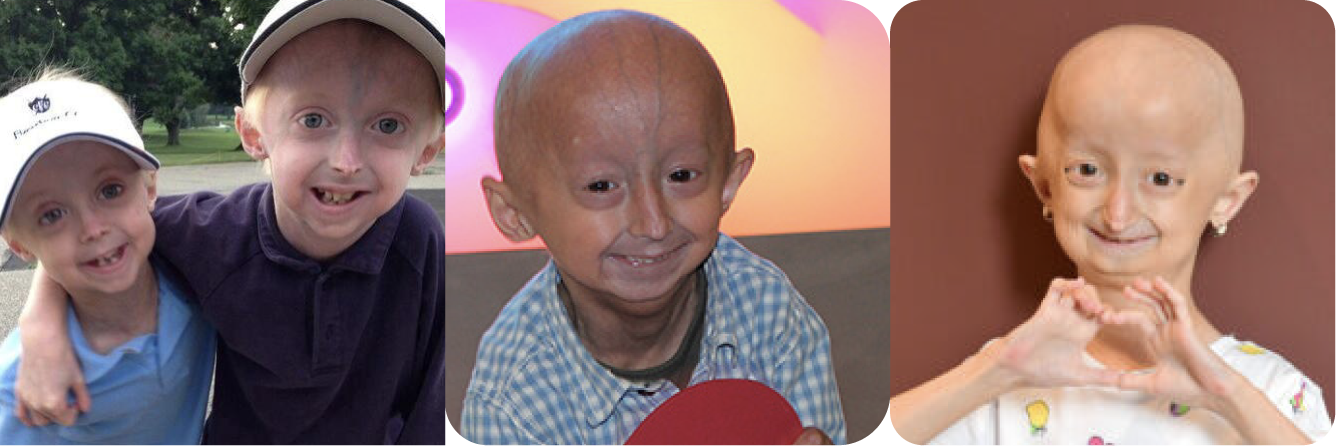
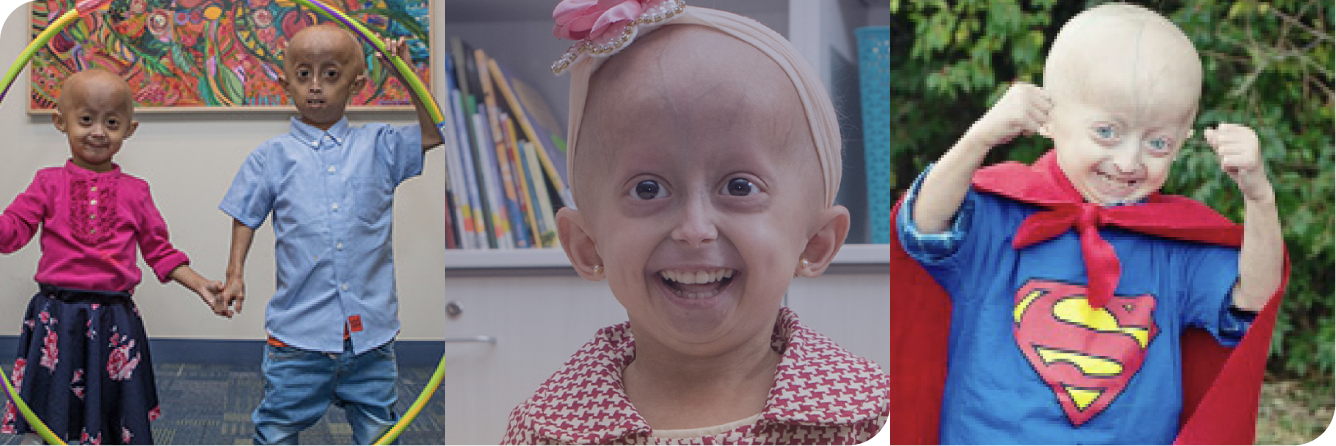
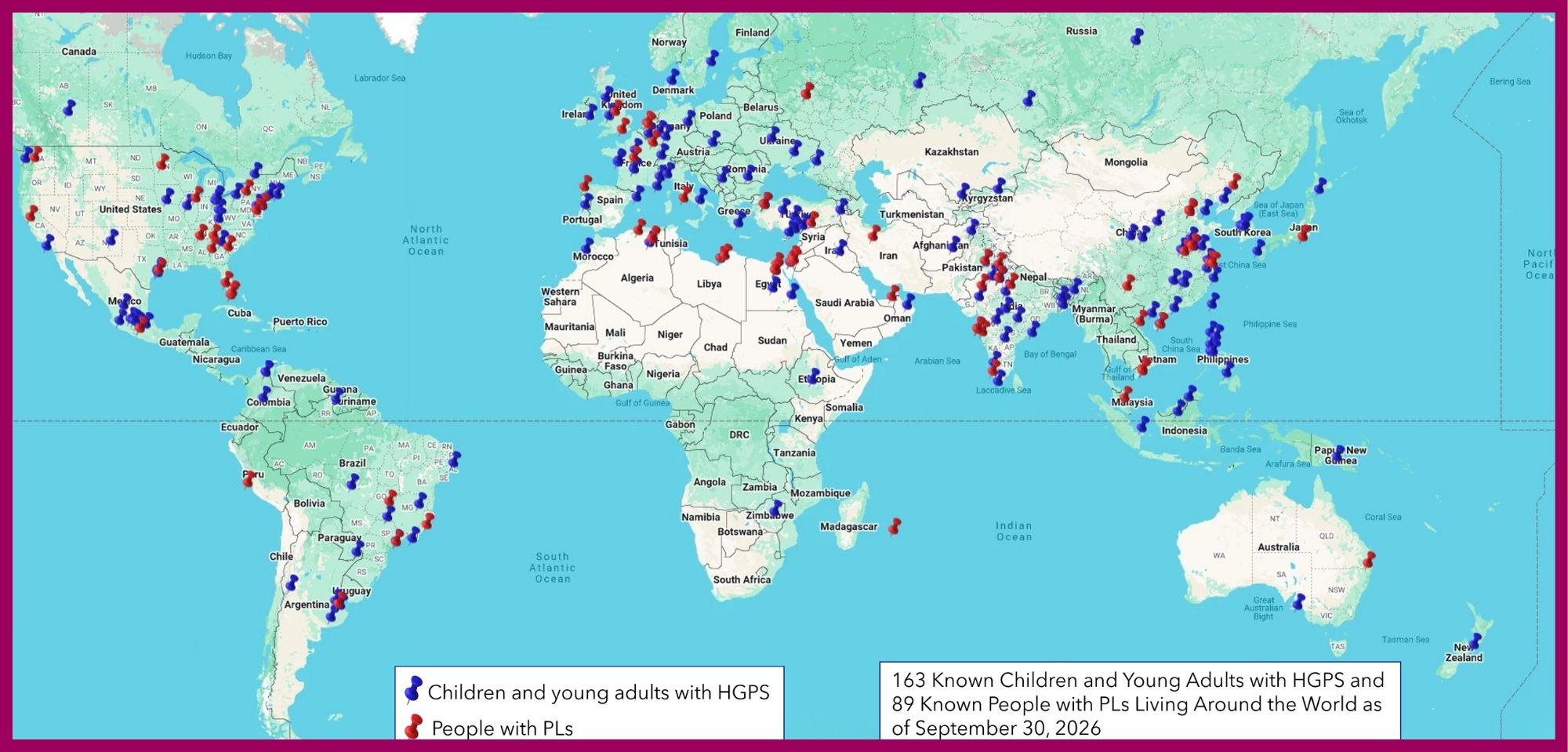
Children and young adults with Progeria and their families are active partners in all of PRF’s research efforts, including this one. We meet with families twice a year over Zoom, bringing together people from around the world speaking many different languages, using interpreters. These families are at the heart of this work. We listen carefully to their perspectives on gene therapy and take their questions and concerns seriously. Their input helps guide how we move forward, ensuring this research is shaped by the people it is meant to help.
How will the first trial participant be chosen? Does PRF decide?
PRF will not select the individual patient for the initial trial. That decision will be made independently, with the final protocol and eligibility criteria determined by our clinical team, the partnering hospital, and the FDA. We will communicate transparently with families as those details are finalized.
How will clinical trials be structured?
We plan to begin with an initial N-of-1 trial involving a single carefully selected patient, and then move to a larger multi-patient trial within approximately a year after that. While the first trial is underway, we will continue animal studies and FDA interactions required for the larger trial and work on manufacturing sufficient quantities of SamPro-2 to be ready to proceed without delay.
Is it better to treat children younger?
It is natural to assume that treating earlier leads to better results, and we believe this is likely true for Progeria as well. However, our experience with lonafarnib showed meaningful benefits across all age groups — even older children benefited significantly. For the clinical trials, we plan to start by treating older patients. Once safety and efficacy have been demonstrated in those patients, we will begin treating younger patients. The eventual, long-term, goal will be to be able to treat patients soon after diagnosis, which is when the therapy has the best chance of stopping the disease in its tracks.
How will you know if the treatment is working?
We plan to monitor blood progerin levels and conduct comprehensive clinical testing on a regular basis throughout the trial, giving us the best chance of detecting drug effect and catching any concerns early.
How will side effects be monitored over the long term?
Gene therapy trials typically follow patients for 10 to 15 years to carefully track both safety and sustained effectiveness. PRF covers these follow-up expenses. Our trials have always been conducted under rigorous FDA oversight and independent safety committees, with side effects reported and reviewed in real time.
Why is PRF the right organization to lead this effort?
PRF has driven every major breakthrough in Progeria for 25 years, from discovering the causative gene to conducting the clinical trials that led to the first FDA-approved treatment. We have the science, the partners, the families' trust, and the proven experience to lead this path to a cure responsibly, efficientfly, and effectively.
Why does this work require philanthropy?
This is ultra-rare disease research at the frontier of medicine. The science is complex, the development costs are high, and drug companies cannot make a profit from doing this for our children. Philanthropic support is the only way to make gene therapy for children with Progeria a reality.
What we are doing together is the perfect example of what Sam’s philosophy for a happy life: Be okay with what you can’t do because there is so much that you can do. We’re surrounding ourselves with the right people because that’s the only way to move forward and make progress.
We’ve turned a corner. We’re drug developers and we’re doing this together because it is only together that we WILL find the cure!
Why is PRF manufacturing the drug rather than partnering with a drug company?
For ultra-rare diseases like Progeria, there simply isn’t a drug company willing to take on the enormous cost of development. These diseases affect too few patients for traditional business models to work. Because of that reality, PRF has stepped in to do what no one else would. We have become drug developers by necessity, so that children with Progeria are not left out just because the treatment may not be profitable.
PRF's #1 focus is on the children!
How can I make a gift or learn more?
Contact Michelle Fino, Director of Development: [email protected] | 978-535-2594
Every gift matters. Every donor moves the cure forward.