Quick Facts PDF
MISSION: to discover the cure and effective treatment
for Progeria and its aging related disorders
- Number of known children living with Progeria: 64 children in 30 countries
- Number of children tested through PRF Diagnostic Program: 85
- Number of grants funded since PRF was established: 28
- Number of cell lines in Cell & Tissue Bank: 133
- Number of children participating in the PRF Medical & Research Database: 92
What is Progeria?
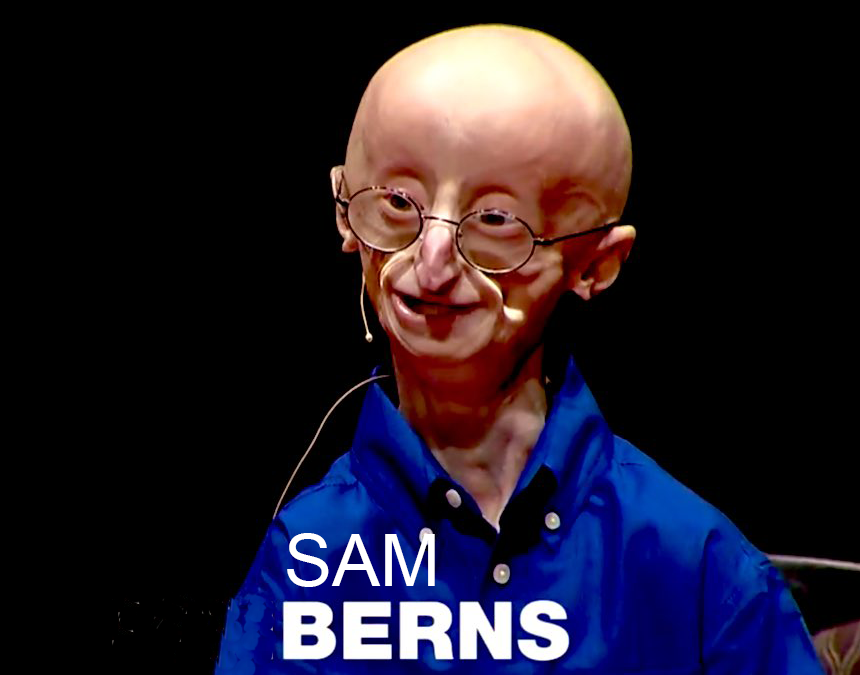
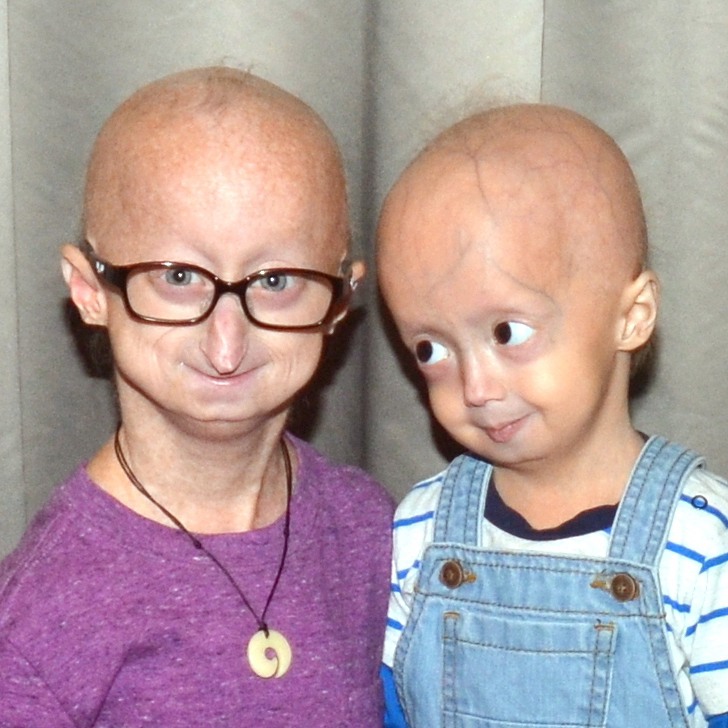
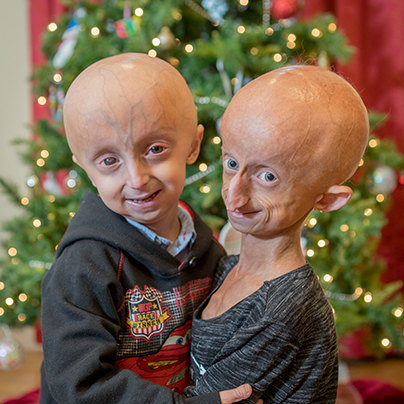
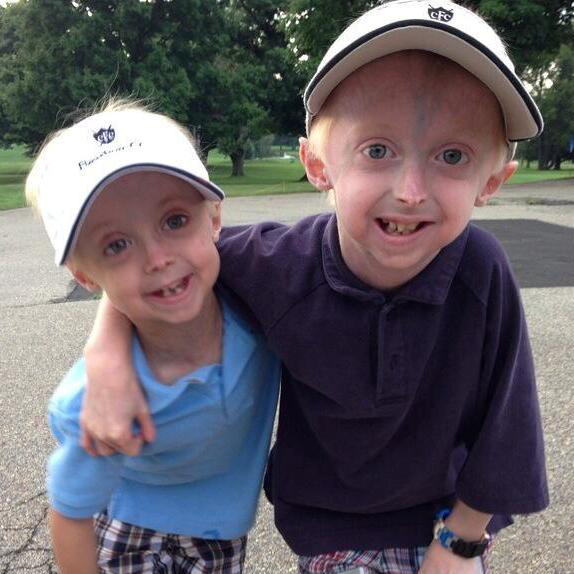
Progeria, also known as Hutchinson-Gilford
Progeria Syndrome (HGPS), is a rare, fatal genetic condition characterized by
an appearance of accelerated aging in children. All children with Progeria
die of the same heart disease that affects millions of normal aging adults (arteriosclerosis), but instead of occurring at 60 or 70 years of
age, these children may suffer strokes and heart attacks as
early as ages 5 or 6.
Remarkably, the intellect of children with Progeria is unaffected, and
despite startling physical changes in their young bodies such as heart disease,
alopecia and osteoporosis, these extraordinary children are intelligent, courageous,
and full of life..
What is PRF?
The Progeria Research Foundation (PRF) was established
in 1999 by the parents of a child with Progeria, Drs. Leslie Gordon and Scott
Berns, and many dedicated friends and family who saw the need for a medical
resource for the doctors, patients, and families of those with Progeria, and
for funding of Progeria research. Since
that time, PRF was the driving force behind the discovery of the Progeria gene,
and has developed a diagnostic test, cell & tissue bank, grassroots
funding, and medical database to aid those affected by HGPS and those
researchers that want to conduct Progeria research. Today, PRF is the only non-profit organization solely dedicated
to finding treatments and the cure for Progeria, and is now being hailed as a
model for disease-research organizations and a prime example of successful
translational research, moving from the lab to treatments at a pace virtually
unheard of in the scientific community.
Total Dollars Raised
1999 to January 2010: $8,287,381
85-90% of PRF’s
annual expenses are consistently
dedicated to its programs and services.
The
support we have received made the Progeria gene discovery, the
Progeria clinical trials and all of our extraordinary progress
possible. With the continued help of
our supporters, we will win this race against time and find treatments and the
cure for these special children – and perhaps help millions who suffer from
heart disease and other, aging-related conditions.
PRF’S PROGRAMS & SERVICES
- First-Ever Progeria Clinical
Drug Trials for Progeria: PRF funded and
co-coordinated a $2 million, first-ever clinical drug trial for Progeria that
took place in Boston with partners Children’s Hospital Boston
(CHB), Dana Farber Cancer Institute and Brigham and Women’s Hospital. The
trial drug is called a farnesyltransferase inhibitor, or FTI, a drug that has
shown great promise in the laboratory and in animal models. 28 children from 16 countries enrolled,
ages 3 to 15 years, and the trial ended in December 2009. Trial results are
expected to be published in a scientific journal in 2010. If the drug proves
effective, it will be a remarkable step forward in the pursuit of a cure.
Since the start of the first trial, researchers identified two additional drugs
that, when used in combination with the current FTI drug being tested, may
provide an even more effective treatment for children with Progeria than the
single drug. Not wanting to wait until the first trial was complete to save
precious time in the quest to find effective treatments, PRF moved quickly to
explore these additional treatment options. PRF and CHB began a second clinical
trial for Progeria in August 2009. The "Triple Drug Trial" is much
larger than the first, involving 45 children from 24 countries, speaking 17
different languages.
- Cell & Tissue Bank: The PRF Cell & Tissue Bank provides medical
researchers with genetic and biological material from Progeria patients and
their families, so that research on Progeria and other aging-related diseases
can be performed to bring us closer to finding the cure. PRF has collected an impressive 83 cell lines
from affected children worldwide (with ages ranging from 8 months to 17 years),
and 50 lines from their immediate relatives.
- Medical & Research Database: The database is a
collection of medical records of Progeria patients from all over the
world. The data is rigorously analyzed
to determine the best course of treatments to improve the patient’s quality of
life. This information is invaluable
for the attending physician to guide the family through the best course of
action. To date, PRF has enrolled 92 children in the program, and published three formal healthcare recommendations:
Cardiac Care, Nutrition, and Occupational Therapy/Physical Therapy. The database was critical in determining the
primary clinical outcome parameter for the first-ever clinical drug trial for
Progeria.
- Diagnostic Testing: PRF developed a diagnostic test for Progeria in the wake of the
2003 gene discovery so that children, their families and medical caretakers can
get a definitive, scientific diagnosis.
This can translate into earlier diagnosis, fewer misdiagnoses and early
medical intervention to ensure a better quality of life for the children.
- Scientific Workshops on Progeria: PRF has organized five scientific conferences that
have brought together scientists and clinicians from all over the world to
share their expertise and cutting edge scientific data, and foster
collaboration in the fight against this devastating disease. The next one will be
held April 11-13, 2010 in Boston, MA.
- Publications and Research: A major goal of PRF
is to promote awareness about Progeria and the progress being made in the field
of Progeria research. Dozens of publications
on Progeria, many acknowledging PRF grant support or support providing cells,
have been published in well-known, respected scientific journals read by
thousands of researchers worldwide. The
average annual number of scientific publications on Progeria since 2002 is more
than 10 times that of the previous 50 years.
- Research Grants: PRF has awarded 28 research
grants totaling over $2 million through peer review by our volunteer Medical
Research Committee. Awards of up to $100,000,
for up to two years, have allowed innovative new research in Progeria to
thrive.
- Web Site/Public Awareness: ProgeriaResearch.org provides visitors with access to
the latest information on Progeria research, support, and education for
families and caregivers, and enjoys an average of 15,000 visitors per month. PRF’s
newsletters reach nearly 10,000 people in 52 countries. PRF’s story has appeared on The Dr. Oz Show,
CNN, Primetime Live, Dateline, The Today Show, in Time and People
magazines, The New York Times, The Wall Street Journal (front page!)
and dozens of other widely-read media outlets.
PRF and its partner GlobalHealthPR recently launched a
global awareness campaign called Find
the Other 150, to drive the search for unidentified children with Progeria
worldwide by raising awareness of the disease among both the general public and
medical communities. The campaign has already helped find several more
children.
- Progeria Family Outreach - The PRF Family Chat Room: To further provide valuable resources for families of children with
Progeria, PRF has created a private Web site to help the families get to know
each other and develop a support network where they can share concerns and
ideas on how best to care for their children.
WHO’S WHO AT PRF?
Audrey Gordon, Esq., President and
Executive Director, Co-Founder
Audrey Gordon, Esq. oversees all
administrative aspects of The Progeria Research Foundation, including the Board
of Directors’ activities, fund-raising events, grant writing, medical research
projects administration, and volunteer programs.
Leslie B. Gordon, MD, PhD, Medical
Director, Co-Founder
Dr. Gordon co-founded The Progeria Research Foundation with friends and family
after her son, Sam, was diagnosed with Progeria. As PRF’s medical director, Dr. Gordon oversees the Diagnostics
Testing Program, Cell & Tissue Bank, and Medical & Research Database,
and is a co-chair for the Progeria clinical drug trials. She is Associate Professor of
Pediatrics Research
at the Warren Alpert Medical
School of Brown University and Hasbro Children’s Hospital in Providence, RI, where she conducts her basic science
research on Progeria, and a staff
scientist at Children’s Hospital Boston and Harvard University Medical School,
where she conducts her clinical research on Progeria.
Scott D.
Berns, MD, MPH, FAAP, PRF Chairman of the Board, Co-Founder
Dr.
Berns, Sam’s father, is a co-founder of The Progeria Research Foundation, and serves
as the Chairman of the Board. He is a
Board Certified Pediatrician and is Senior Vice President of Chapter Programs
at the March of Dimes.
Tina,
Brandon, Brittany and Zach Pickard, PRF’s Ambassador Family
In February 2010, the family of 3-year-old Zach Pickard was named PRF’s
Ambassador Family. The Pickards live in Lexington, Kentucky, and are an
integral part of PRF’s efforts to raise public awareness, involve other
families in our programs, and raise funds for research. We appreciate the
time and effort they put into these important activities.